
The day American soft power died
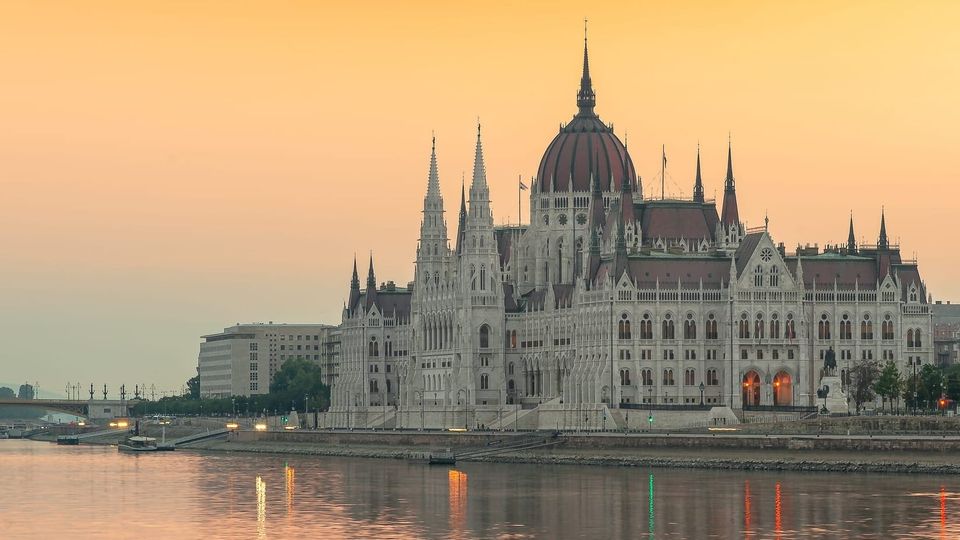
It’s a fair question — how did the Vice President of the United States fly to Budapest, days before the election, in a clear attempt to boost Orbán's popularity, but instead end up assisting in a historic defeat?
A visit by a Vice President of the United States is, under any circumstances, a major event — especially in Central and Eastern Europe, where pro-American sentiment runs deep regardless of which party is in the White House. That a visit may have contributed to a loss is, depending on your sympathies, either grimly ironic or darkly comic.
The veep’s logic was clear. Orbán was the closest leader in Europe to Trump, so surely his people would welcome Washington's blessing?
There are even some solid historic precedents. Maybe not in Hungary, not during election time, but US leaders have made a huge positive impact on us Europeans in the past. Kennedy's 'Ich bin ein Berliner.' Reagan's 'Tear down this wall.' American leaders moved Europeans to tears. So why not this time?
President Bush visited my country Lithuania in 2002, just before announcing the invitation to join NATO. His words, proclaimed on the steps of Vilnius town hall, that “anyone who would choose Lithuania as an enemy has also made an enemy of the United States of America,” were then cast in bronze and screwed into the town hall wall. Lithuanians were still applauding the speech even after Bush left the stage.
And in Hungary’s case it wasn’t only a speech. There was an endorsing tweet. A video message weeks before. And then the Vice President himself.
If you are enjoying this article and you would like to support our work, join Friends of Democracy today!
In the eyes of the Lithuanians cheering George W Bush in 2002, the US was a selfless superpower opening its benevolent defence umbrella over the heads of the weaker nations. Lithuania had long waited for this moment. Not only throughout the years since we restored our independence in 1990, but all the way since the occupation in 1940.
The US was not forced to defend Lithuania, and there was no ulterior motive to be suspected. It was simply the “right thing to do”. I believe that the Berliners listening to Kennedy, or Reagan, felt the same as we did in Vilnius.
The US was never perfect — but it represented aspiration towards an ideal. Liberty, freedom, call it what you want, but it was best represented by the US of A.
This was peak American soft power. It meant that Europeans chose to accept American leadership — not because we had to, but because we believed we were on the right side of history, together.
The Hungary debacle was very different. This time the interests were no longer selfless. Orbán's Hungary spent years systematically weakening Europe — blocking decisions, legitimising Putin's narrative, eroding the EU's ability to act. Ukraine was the most visible casualty, but not the only victim. US support for Orbán’s Hungary was cynical, and many people sensed that acutely.
The policy introduced by the current US administration that shifts the paradigm of transatlantic relations from shared values to the defence of national interests took centre stage in Budapest.
This change diminished the very meaning of “partnership”.
For decades, Europeans knew that even though interests change, fundamental values would bind us. Without those binding values, naked interests failed to capture hearts and minds.
Imagine a US president declaring in an Eastern European capital city that America is only here to sign a rare-earth mining contract. That announcement would not find its way onto a bronze plaque, would it.
The miscalculation in Budapest reveals a deeper problem. It proved impossible to sway voters in a Central European country, but Western Europe harbours even less pro-American sentiment. The same playbook JD Vance used in Hungary, if applied to Le Pen or the AfD, might well result in an electoral windfall for Macron and Merz.
The bronze plaque in Vilnius is still on the town hall wall. Time will tell if it will hang there as a reminder of a real promise that has not yet expired, or an oxidised epitaph dedicated to times gone by.
If you appreciated this article and you would like to support our work, join Friends of Democracy today!


Member discussion